Taunton Motors Taunton Motors

What is a Motor With Encoder and How Does It Work?

Time:2026-07-08 Author:Isabella
0%

In the world of automation and robotics, understanding the role of a Motor With Encoder is crucial. According to recent industry reports, nearly 50% of modern automation systems utilize motors integrated with encoders for precise positioning. These motors enhance performance by providing feedback on position and speed. The integration of encoders allows for closed-loop control, improving accuracy in various applications such as CNC machines and robotic arms.

Motor With Encoders enhance operational efficiency significantly. They ensure that machinery operates at optimal levels, reducing errors and increasing productivity. However, selecting the right encoder type for your application can be challenging. The growing complexity of these systems highlights the need for knowledgeable integration partners. Many manufacturers face difficulties when implementing these technologies, often resulting in suboptimal performance.

Understanding the dynamics of Motor With Encoders is more than a technical necessity; it's an exploration of how these devices can transform industries. As technology evolves, the importance of accurate control and feedback mechanisms will only increase. Keeping pace with advancements in motor technology will be key to staying competitive.
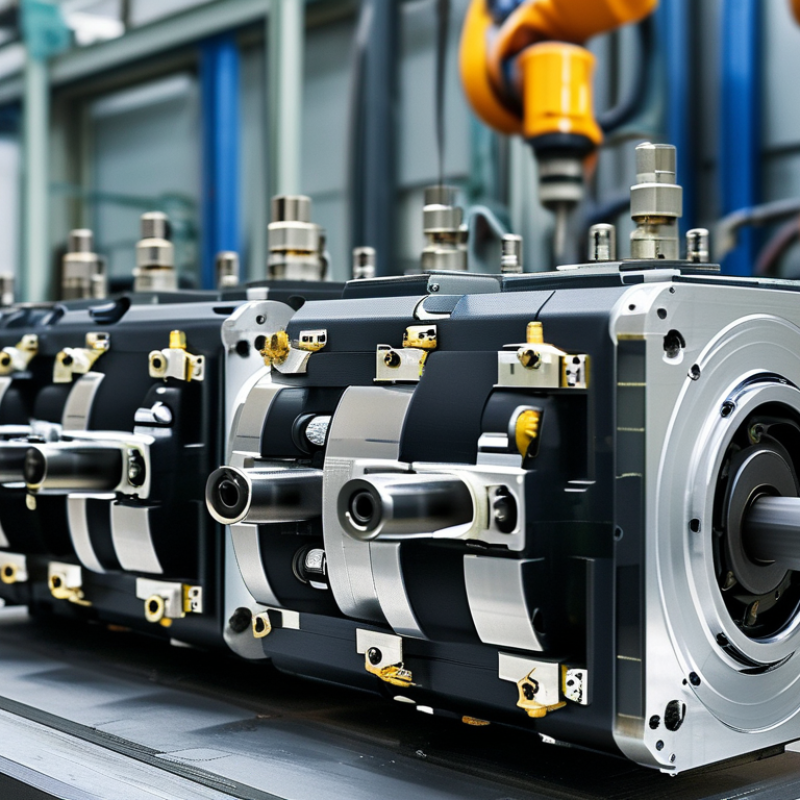
What is a Motor With Encoder and How Does It Work?

What is a Motor with Encoder?

A motor with an encoder is an advanced type of motor that includes a feedback device. This device, often called an encoder, measures the motor's position, speed, and direction. Encoders can be incremental or absolute, each serving different purposes. Incremental encoders track movement from a starting point, while absolute encoders provide a unique position for every possible rotation. This distinction plays a crucial role in various applications.

In industrial settings, motors with encoders are valuable for precision. They ensure accurate movements in robotic arms, CNC machines, and conveyor systems. The feedback from the encoder allows for real-time adjustments, reducing errors and enhancing efficiency. However, integrating these systems can be complex. Proper calibration is necessary to align the motor and encoder correctly. Missteps in this phase can lead to performance issues.

While the benefits are clear, users must consider limitations. Environmental factors can impact encoder accuracy, such as dust or temperature changes. It's essential to evaluate the application's specific needs and choose the right type of motor and encoder. What works perfectly for one project may not suit another. Building expertise in this area improves overall system performance.

Motor with Encoder Specifications

Parameter Description
Motor Type DC Motor
Encoder Type Incremental Encoder
Rated Voltage 24V DC
Max Speed 3000 RPM
Rated Current 3A
Encoder Resolution 500 PPR (Pulses Per Revolution)
Control Method Closed Loop Control

Key Components of a Motor with Encoder

A motor with an encoder combines the benefits of motion control with precise feedback systems. Encoders are essential for ensuring accurate position tracking, speed measurement, and motion control. They convert mechanical motion into electrical signals, which the motor can interpret. This technology allows for fine-tuned operation in industrial applications.

Key components of a motor with an encoder include the motor itself, the encoder, and a controller. The motor generates mechanical energy. Encoders can be either incremental or absolute, each with its specific application advantages. According to industry reports, around 60% of automation systems now use encoders for improved accuracy. Controllers process the signals from the encoders, adjusting motor output accordingly.

Improperly integrated systems often suffer from noise and false readings. This can lead to decreased efficiency or mechanical failure. Moreover, choosing the correct encoder type is vital for optimal performance. The modern industrial landscape is increasingly reliant on these technologies, highlighting the importance of robust encoder-motor systems.

How Does an Encoder Function in Motor Control?

An encoder plays a crucial role in motor control. It translates the rotary position of the motor shaft into an electrical signal. This feedback helps in determining the exact position, speed, and direction of the motor's movement. Knowing the motor's position is vital for many applications, especially in robotics and automation. Without precise feedback, operations can become imprecise and risky.

Encoders can be classified into different types, such as incremental and absolute. Incremental encoders report changes in position, while absolute encoders provide a specific location. Both types have their strengths and weaknesses. Incremental encoders might lose their position after power loss, while absolute encoders maintain their data. Each application may require one over the other, depending on specific needs.

Integration of encoders with motor controllers is essential. Controllers use encoder signals to make real-time adjustments. This ensures that the motor maintains its intended performance. However, challenges may arise during calibration or wiring issues. Debugging these problems often requires a thoughtful approach. Understanding the intricacies of encoders leads to better motor control and optimization. Each experience can provide valuable lessons, enhancing future implementations.

Applications of Motors with Encoders in Industry

Motors with encoders have become essential in various industrial applications. These systems provide precise control over motor position and speed. They are often used in robotics, conveyors, and CNC machines. The encoder translates the motor's rotation into digital signals. This feedback allows for real-time monitoring and adjustments.

In the manufacturing sector, the ability to track movement accurately is crucial. For instance, in assembly lines, motors with encoders help maintain consistency. They ensure that parts are placed accurately every time. However, implementing such technology can be complex. Engineers must select the right type of encoder for each task. This can lead to costly missteps if not done correctly.

Another area involves packaging machinery. Here, motors with encoders help ensure products are filled and sealed correctly. Accuracy in this process is vital for quality control. Yet, there can be challenges with wear and tear over time. Regular maintenance is necessary to maintain performance. Adopting this technology requires a commitment to both training and upkeep.

Advantages of Using Motors with Encoders in Automation

In automation, motors with encoders play a vital role in enhancing precision and control. These systems exponentially improve feedback mechanisms, ensuring accurate positioning. A recent industry report from the International Society of Automation highlighted that using encoders can reduce positioning errors by up to 30%. This is crucial in applications where precision is non-negotiable, like robotics and CNC machining.

Employing motors equipped with encoders allows for real-time monitoring of speed and position. This data can lead to more efficient operations. Reports suggest that automation systems with closed-loop control can increase productivity by 20% to 30%. Yet, integrating such technology can be complex. It requires precise calibration and troubleshooting during setup. Organizations must weigh potential challenges against the efficiency gains.

Moreover, while these systems promise improved performance, they also come with increased costs. A detailed analysis indicated that the initial investment in encoder technology could be substantial. Organizations must carefully consider their return on investment (ROI). In some cases, the benefits may not be immediately apparent, requiring a thorough examination of operational needs and long-term goals.

FAQS

: What is the role of an encoder in a motor system?

: An encoder converts mechanical motion into electrical signals, aiding in precise position tracking and speed measurement.

How do motors with encoders improve automation?

They enhance feedback mechanisms, reducing positioning errors by up to 30% for accurate operations.

What are the two main types of encoders?

Encoders can be incremental or absolute, each suitable for specific applications and requirements.

What are the potential issues with poorly integrated systems?

Improper integration may cause noise, false readings, and decreased efficiency or even mechanical failures.

Can using motors with encoders lead to productivity gains?

Yes, closed-loop control systems can increase productivity by 20% to 30% through real-time data monitoring.

Are there any costs associated with implementing encoders in motors?

Yes, the initial investment can be substantial, and organizations should assess their return on investment.

What challenges might users face during integration?

The integration process requires precise calibration and troubleshooting, which can be complex and demanding.

Is immediate performance improvement guaranteed with encoder technology?

Not always. Benefits may not be immediately visible, necessitating a careful analysis of operational needs.

Why is the choice of encoder type crucial?

The right encoder type is vital for optimal performance across various industrial applications and systems.

How does the modern industrial landscape view encoders?

There is a growing reliance on robust encoder-motor systems to enhance automation and operational efficiency.

Conclusion

A motor with encoder is a crucial component in many automation applications, providing precision control and feedback in various industrial processes. Key components of such a system include the motor itself and the encoder, which measures the rotational position and speed. The encoder functions by converting the mechanical movement into electrical signals, allowing for real-time monitoring and adjustments to enhance accuracy.

Motors with encoders find extensive applications across industries, including robotics, manufacturing, and conveyor systems, where precise positioning is essential. The advantages of using motors with encoders in automation are significant; they improve efficiency, enhance performance, and reduce the likelihood of errors, making them indispensable in modern engineering and production environments.

Isabella

Isabella

Isabella is a dedicated marketing professional with a sharp focus on driving brand growth and engagement through strategic content creation. With an extensive background in digital marketing, she combines her passion for storytelling with her keen understanding of industry trends to deliver......