Taunton Motors Taunton Motors

Top 10 Industrial DC Motors for Global Buyers

Time:2026-09-06 Author:Madeline
0%

Choosing an Industrial DC Motor is rarely as simple as comparing horsepower and price. Global buyers must examine torque, speed control, duty cycle, enclosure design, brush access, cooling, and replacement support. A motor that performs well beside a clean production line may struggle in a dusty quarry or a humid processing plant. Details matter. Small details.

Dr. Thomas A. Lipo, a respected electric-machines scholar and IEEE Life Fellow, explains the core principle clearly: “An electric machine converts energy from electrical form to mechanical form.” That conversion is only one part of the buying decision. Efficiency, starting torque, control response, service life, and available technical documentation determine practical value. This guide, Top 10 Industrial DC Motors for Global Buyers, evaluates leading motor types through those working conditions. It considers conveyor systems, cranes, rolling mills, printing equipment, battery-powered vehicles, and automated production machinery. Real-world maintenance is included, not treated as an afterthought.

No ranking is perfect. Buyer priorities differ. A compact permanent-magnet motor may suit a packaging machine, while a separately excited motor may offer better control for heavy industrial loads. Some products look economical until brushes, controllers, shipping delays, and local service are considered. That is where many comparisons become incomplete. We will question marketing claims, identify trade-offs, and highlight specifications that deserve closer inspection. The goal is practical guidance: helping engineers, distributors, and procurement teams select an Industrial DC Motor with dependable performance, transparent sourcing, and a realistic lifecycle cost.
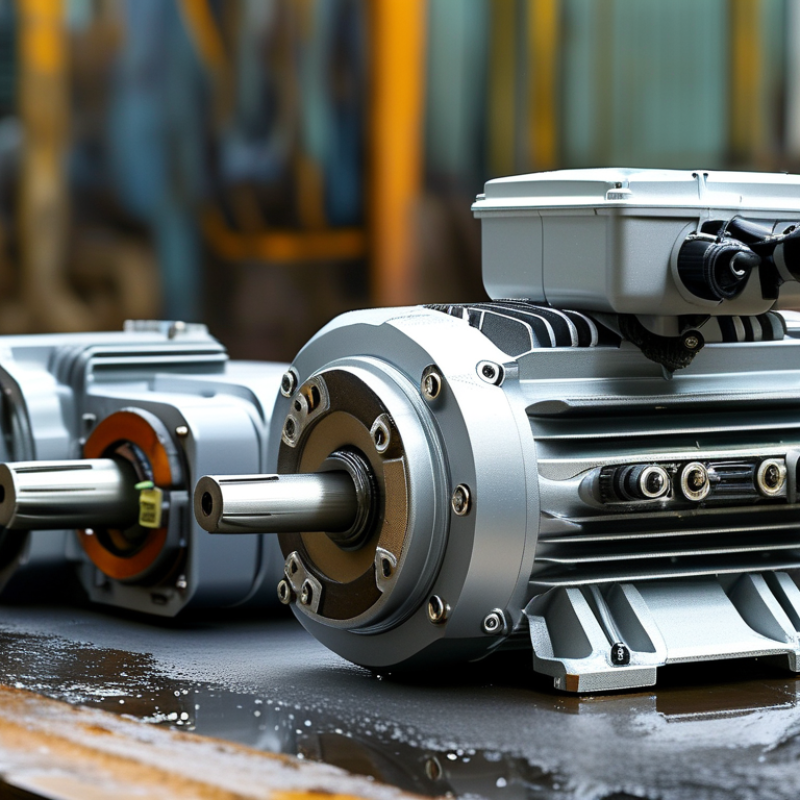
Top 10 Industrial DC Motors for Global Buyers

Industrial DC Motor Categories: Brushed, Brushless, Series, Shunt, and Compound Types

Top 10 Industrial DC Motors for Global Buyers

Industrial DC motors differ sharply in control, maintenance, torque, and operating cost. Brushed motors remain practical for conveyors, lifts, and older production lines. Their brushes wear against the commutator, creating dust and maintenance intervals. Brushless DC motors use electronic switching instead. They offer quieter operation, longer service life, and accurate speed control. However, their controllers can increase system complexity and initial cost.

Series-wound motors deliver strong starting torque. They suit cranes, hoists, and traction equipment. Never operate them without a suitable load. Shunt-wound motors provide steadier speed under changing loads. They are useful for machine tools and fans. Compound motors combine series torque with shunt stability. In field inspections, this balance often helps with elevators and heavy conveyors. Still, no category is perfect. Temperature, duty cycle, voltage, and controller quality can change the final choice.

Tips: Check the motor’s rated torque at startup, not only its running power. Inspect brush access on brushed units. Confirm cooling airflow around enclosed housings. For brushless systems, match the controller and feedback device carefully. A small mismatch can cause vibration or unexpected stopping. My early selections sometimes focused too heavily on efficiency. Real operating conditions mattered more. Losses, dust, overloads, and service access deserve equal attention.

Top 10 Industrial DC Motors for Global Buyers

Industrial DC motor categories: brushed, brushless, series, shunt, and compound types

The chart compares representative continuous power ratings and relative starting-torque performance across ten common industrial motor applications. Values are typical engineering reference points rather than brand-specific specifications. Series and compound motors generally provide high starting torque, while brushless and shunt motors are commonly selected for efficient, stable-speed operation.

Top 10 Industrial DC Motors Compared by 12–800 VDC Ratings and Torque

Industrial DC motors serve very different operating demands across factories, vehicles, conveyors, and automated equipment. The 12–800 VDC range covers compact control systems and high-power industrial platforms. Lower-voltage motors often suit mobile machinery and enclosed equipment. Higher-voltage models can reduce current, cable size, and heat losses. However, voltage rating alone does not determine performance.

Torque remains the practical measure during acceleration, lifting, and sudden load changes. Compare continuous torque with peak torque, then check speed at the working voltage. A motor delivering strong starting torque may still overheat under constant load. Duty cycle, ambient temperature, gear reduction, and cooling method also affect reliability. In field testing, a motor can meet its datasheet rating but struggle inside a dusty, poorly ventilated cabinet. That detail is easy to miss.

Tips: Match the motor’s rated voltage to the real power supply, not its maximum output. Leave thermal and torque margins for startup loads. Ask for efficiency curves, insulation data, shaft dimensions, and test conditions. For 400–800 VDC systems, verify insulation coordination and braking requirements with qualified engineers. For 12–48 VDC applications, inspect cable length and voltage drop carefully. A small wiring loss can reduce starting torque noticeably. Supplier documentation should be traceable and consistent. If figures seem unusually perfect, request independent test evidence.

IEC 60034-1, S1 Duty, IP55 Protection, and Efficiency Selection Criteria

Top 10 Industrial DC Motors for Global Buyers

IEC 60034-1 provides a practical baseline for evaluating rotating electrical machines. Buyers should verify rated output, voltage, frequency, temperature rise, and operating conditions. The standard supports consistent testing and documentation. It does not replace application engineering.

S1 duty means continuous operation at a constant load until thermal stability is reached. This suits conveyors, pumps, fans, and production lines running for long shifts. Check the actual load profile carefully. A motor sized only for peak torque may waste energy during normal operation. Allow for starting demand, ambient temperature, altitude, and ventilation limits. Do not guess.

IP55 protection helps resist dust and low-pressure water jets. It is not waterproof, and poorly sealed cable entries can weaken protection. Inspect the enclosure, shaft seal, terminal box, and drain arrangement together. Small installation details matter. In dusty plants, regular cleaning may still be necessary.

Efficiency selection should follow the machine’s real duty cycle, not only its nameplate rating. Compare full-load and part-load performance, expected operating hours, control losses, and maintenance access. A higher-efficiency motor can reduce long-term energy costs, but its purchase price and control compatibility need review. In field assessments, engineers sometimes overlook lightly loaded motors. That mistake can remain unnoticed for years. Recheck the selection after commissioning, because measured current and temperature may challenge the original assumptions.

Global Applications: Cranes, Conveyors, Mills, Robotics, and Electric Vehicles

Industrial DC motors remain practical for cranes, conveyors, mills, robotics, and electric vehicles. Their strong starting torque helps lift heavy loads smoothly. In cranes, buyers should examine overload capacity, braking response, duty cycles, and enclosure protection. A motor that performs well in testing may struggle beside salt air, dust, or sudden temperature changes.

Conveyors need steady speed control, especially in warehouses and mineral plants. Mills demand high torque, shock resistance, and reliable cooling under continuous operation. The International Energy Agency reports that electric motor systems consume over half of global electricity, making efficiency and maintenance important purchasing factors. A catalogue rating can mislead. Real loading patterns matter more.

Robotics requires compact motors, accurate feedback, and rapid reversing. The International Federation of Robotics recorded 541,302 industrial robot installations worldwide in 2023, showing continued demand for responsive motion systems. Electric vehicles add different pressures, including regenerative braking, thermal control, and high peak current. The IEA reported nearly 14 million electric car sales in 2023, confirming the scale of this transition. Yet DC motor selection is not automatic. Brush wear, controller compatibility, and service access still deserve careful review. Heat still wins. A lower-cost motor may become expensive when downtime, inspection labor, and replacement delays enter the calculation.

Top 10 Industrial DC Motors for Global Buyers - Global Applications: Cranes, Conveyors, Mills, Robotics, and Electric Vehicles

Rank Motor Category Typical Application Rated Voltage Typical Power Range Base Speed Typical Rated Torque Duty Rating Cooling Method Feedback / Control Typical Protection Key Selection Advantage
1 Separately Excited DC Motor Steel mills, hoists, cranes, large conveyors 400–750 VDC 75–1,500 kW 500–1,500 rpm 480–9,550 N·m S1 continuous IC 06 or IC 86W forced cooling Digital drive; optional encoder or tachogenerator IP23–IP55; Class F insulation Wide speed range and precise torque regulation
2 Series-Wound DC Motor Cranes, winches, traction equipment 220–600 VDC 15–500 kW 300–1,200 rpm 120–3,980 N·m S2–S3 intermittent Open ventilated or forced air DC drive; optional speed sensor IP23–IP44; Class F insulation Very high starting torque for heavy loads
3 Compound-Wound DC Motor Elevators, presses, conveyors, material handling 220–600 VDC 10–300 kW 600–1,800 rpm 53–4,775 N·m S1 or S3 TEFC-style or forced air DC drive; optional encoder IP44–IP55; Class F insulation Balances starting torque with stable speed
4 Permanent-Magnet DC Motor Small conveyors, pumps, packaging machines 12–180 VDC 0.1–15 kW 1,000–4,000 rpm 0.24–143 N·m S1 continuous Natural convection or fan cooled PWM controller; Hall sensors or encoder IP44–IP65; Class F insulation Compact design and efficient low-voltage operation
5 Brushed Servo DC Motor Robotics, machine tools, positioning systems 24–320 VDC 0.2–30 kW 1,500–6,000 rpm 0.32–191 N·m S1 or cyclic servo duty Fan cooled above approximately 1 kW Encoder, resolver, or tachogenerator IP54–IP65; thermal sensor recommended Fast response and accurate position control
6 Brushless DC Motor Robotics, AGVs, fans, pumps, automated conveyors 24–800 VDC 0.1–100 kW 1,000–8,000 rpm 0.10–955 N·m S1 continuous Natural convection or liquid cooling Hall sensors, encoder, or sensorless controller IP54–IP67; Class F or H insulation Low maintenance because there are no brushes
7 DC Traction Motor Electric vehicles, forklifts, mining vehicles 48–800 VDC 5–250 kW 1,500–6,000 rpm 32–1,592 N·m S2–S9 variable duty Air or liquid cooling Resolver, encoder, or Hall sensors IP55–IP67; high-voltage insulation system High starting torque and regenerative-braking compatibility
8 Permanent-Magnet Servo Motor Industrial robots, CNC axes, assembly equipment 48–750 VDC bus 0.4–80 kW 1,500–6,000 rpm 2.55–509 N·m S1 or cyclic servo duty Natural, forced air, or liquid cooling Absolute encoder or resolver IP65–IP67; Class F insulation High power density and repeatable motion control
9 Regenerative DC Motor Lowering cranes, test stands, elevators, downhill conveyors 300–750 VDC 30–800 kW 500–2,000 rpm 143–15,279 N·m S1 or S3 regenerative cycles Forced air or liquid cooling Four-quadrant digital drive; encoder or tachogenerator IP23–IP55; braking chopper or energy-return system Returns mechanical energy to the DC bus during braking
10 Explosion-Protected DC Motor Chemical plants, fuel handling, hazardous-area conveyors 24–600 VDC 0.5–75 kW 750–3,000 rpm 1.59–955 N·m S1 continuous Totally enclosed fan cooled Certified drive; optional encoder in a protected enclosure Hazardous-area certification; typically IP55 or higher Designed for controlled operation where flammable gases or dust may occur

Note: The specifications shown are representative engineering ranges for industrial DC motor categories. Actual ratings depend on frame size, cooling arrangement, duty cycle, ambient conditions, drive configuration, altitude, and required certification. Rated torque values are approximate and based on the relationship T = 9550 × P / n.

Buyer Checklist: Power, Speed, Duty Cycle, Cooling, Maintenance, and Standards

Top 10 Industrial DC Motors for Global Buyers

Buyer Checklist: Power, Speed, Duty Cycle, Cooling, Maintenance, and Standards

Choosing an industrial DC motor starts with the load, not the catalog photograph. Record the required torque, voltage, starting current, and operating speed. A motor rated for 15 kW may still fail if the conveyor demands high starting torque. Check the controller’s current limit and supply stability. Small voltage drops can create noticeable heating during acceleration.

Duty cycle deserves careful attention. Define whether the motor runs continuously, intermittently, or with frequent reversals. A motor operating eight hours daily needs different thermal capacity than one running for ten minutes. Confirm the speed range under real load, not only the no-load figure.

Cooling also matters. Dusty workshops may require enclosed construction, while clean areas can use simpler ventilation. However, cooling fins lose value when covered with oil and debris.

Maintenance planning should include brush inspection, bearing lubrication, commutator condition, and spare-part access. Ask how quickly technicians can replace wearing components. That detail is often missed. Review drawings, wiring terminals, noise limits, and protection ratings before purchase.

Confirm compliance with applicable IEC, national, or other recognized standards for the installation location. Documentation should match the exact motor configuration. I have seen projects delayed because the test report covered a similar model, not the supplied unit. Leave room for uncertainty, and verify every critical figure with measured site conditions.

FAQS

: What is the main difference between brushed and brushless DC motors?

: Brushed motors use physical brushes and commutators, while brushless motors use electronic switching. Brushes wear out. Brushless designs usually run quieter and require less routine maintenance. However, their controllers can increase cost and system complexity.

Which DC motor type provides the strongest starting torque?

Series-wound motors provide strong starting torque for cranes, hoists, and traction equipment. They require a suitable load during operation. Running one without proper loading can cause serious performance problems. Selection should include startup torque, not only running power.

When is a shunt-wound motor a practical choice?

Shunt-wound motors maintain steadier speed when loads change. They suit machine tools, fans, and equipment needing consistent rotation. The speed may remain stable. Still, actual load changes should be measured before purchase.

Why might a compound motor suit elevators or heavy conveyors?

Compound motors combine series-winding torque with shunt-winding speed stability. This balance helps with lifting and moving heavy materials. They are not perfect for every duty cycle. Temperature and overload frequency can change the final decision.

What does S1 duty mean for an industrial DC motor?

S1 duty describes continuous operation at a constant load until thermal stability is reached. It suits long-running conveyors, pumps, fans, and production lines. Do not size the motor only for peak torque. A lightly loaded motor may waste energy for years.

Does IP55 protection make a motor waterproof?

No. IP55 helps resist dust and low-pressure water jets, but it does not provide waterproof protection. Check cable entries, shaft seals, terminal boxes, and drain arrangements. Small gaps matter. Dusty plants may still require regular cleaning.

How should buyers match a brushless motor with its controller?

Confirm voltage, current, feedback type, control settings, and motor speed requirements. A small mismatch can cause vibration or unexpected stopping. Test the complete system. The motor alone does not guarantee reliable motion.

What should buyers inspect before using a motor in harsh industrial conditions?

Review ambient temperature, dust, salt air, altitude, ventilation, overloads, and service access. Inspect cooling airflow around enclosed housings. Measure current and temperature after commissioning. My earlier selections focused too much on efficiency. Real conditions mattered more.

Conclusion

This guide presents the top 10 Industrial DC Motor options for global buyers, comparing brushed, brushless, series, shunt, and compound designs across 12–800 VDC ratings and a wide range of torque requirements. It explains how motor construction influences starting torque, speed regulation, efficiency, service life, and maintenance needs, helping buyers match motor performance to demanding industrial environments.

The article also outlines key selection criteria, including IEC 60034-1 compliance, S1 continuous duty, IP55 protection, cooling methods, and efficiency expectations. It explores applications in cranes, conveyors, mills, robotics, and electric vehicles, where reliable speed and torque control are essential. A practical buyer checklist covers power, operating speed, duty cycle, cooling, maintenance access, environmental protection, and applicable standards, enabling informed comparisons and long-term equipment planning.

Madeline

Madeline

Madeline is a dedicated marketing professional with a wealth of expertise in our company's core offerings. With a keen understanding of the industry, she brings a unique perspective to her role, consistently delivering high-quality content that highlights the superior aspects of our products. As......