 Taunton Motors
Choosing a Rotary Electric Motor is rarely a simple matter of matching horsepower to a machine. The real decision begins with the application. A conveyor may need steady torque at low speed. A packaging line may demand rapid starts, precise control, and frequent stopping. A pump may operate for thousands of hours in a warm, dusty room. Each condition changes the motor requirement.
Nikola Tesla, whose work shaped modern alternating-current motors, once observed, “The secret of invention is to see what everyone else has seen and to think what no one else has thought.” That principle still matters. Experienced engineers examine more than rated output. They study starting current, duty cycle, voltage stability, enclosure type, ambient temperature, vibration, and available maintenance support. IEC and NEMA guidance can help, but standards do not replace application knowledge. A technically compliant motor can still perform poorly when selected without enough context.
A well-chosen Rotary Electric Motor should deliver dependable torque, efficient energy use, and manageable service demands. It should fit the machine physically, electrically, and operationally. Small details matter. A misaligned coupling can create heat within weeks. An oversized motor may waste energy during light-load operation. An undersized unit may overheat before the shift ends.
There is no perfect selection.
That is worth admitting. Real installations contain uncertainty, changing loads, and imperfect maintenance. This guide examines the practical reasons to choose a Rotary Electric Motor, while questioning assumptions that often influence purchasing decisions.
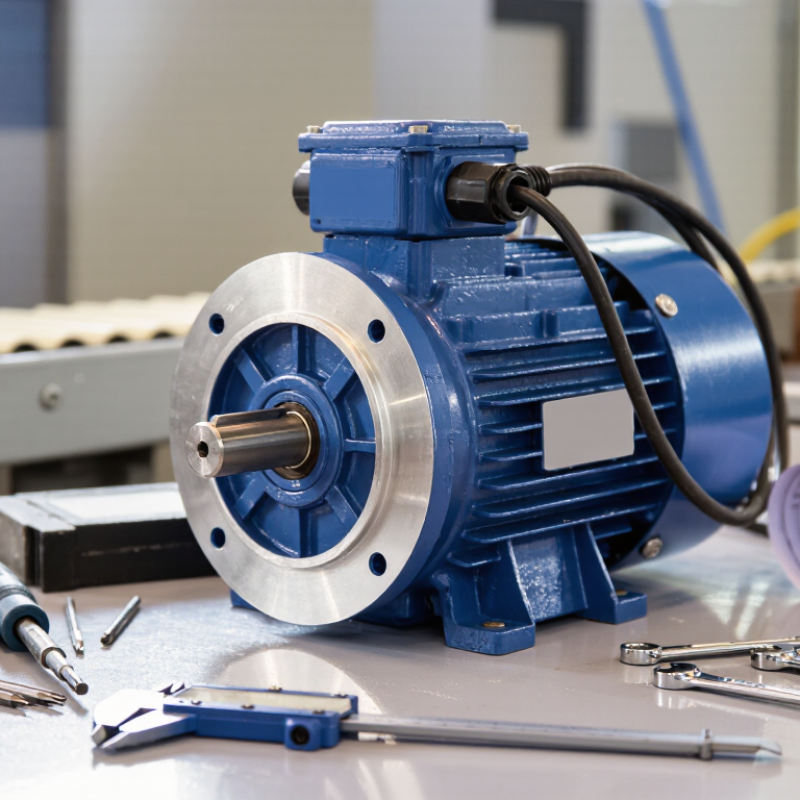
A rotary electric motor converts electrical energy into continuous mechanical rotation. Inside, magnetic fields interact between the stator and rotor. The stator remains fixed, while the rotor turns around a central shaft. This motion can drive pumps, fans, conveyors, compressors, and many other machines.
In practical applications, motor selection depends on torque, speed, voltage, duty cycle, and operating conditions. A motor producing high starting torque may suit a loaded conveyor. A smaller, faster motor may work better in a ventilation system. Engineers also check heat, vibration, enclosure protection, and available space. Small details matter. Poor alignment can increase noise and shorten bearing life.
Rotary motors are often valued for their reliable operation and controllable performance. However, they are not automatically the best choice for every application. Some systems need linear motion or frequent reversing, which may require a different design. I have found that real operating conditions can differ from specifications. Dust, moisture, unstable loads, and limited maintenance access may change the result. Testing the motor under realistic load conditions remains essential. It is easy to overlook.
| Data Dimension | Factual Information | Application Relevance |
|---|---|---|
| Definition | A rotary electric motor converts electrical energy into continuous mechanical rotation. | It provides rotary motion for equipment such as pumps, fans, conveyors, compressors, tools, and machine drives. |
| Main Operating Principle | Magnetic fields produced by the stator and rotor interact to create torque and shaft rotation. | The principle enables reliable conversion of electrical input into controllable mechanical output. |
| Common Motor Categories | Common categories include AC induction, synchronous, brushed DC, and brushless DC motors. | The appropriate category depends on speed regulation, starting torque, control requirements, duty cycle, and operating environment. |
| Power Range | Rotary motors are available from very small fractional-horsepower units to large industrial machines rated in megawatts. | This range allows the same basic motor concept to serve appliances, automation systems, transportation equipment, and industrial machinery. |
| Torque Production | Torque is the rotational force available at the shaft and is commonly measured in newton-metres (N·m). | The motor should provide sufficient starting and running torque for the connected load without excessive heating. |
| Speed Capability | Speed depends on motor design, supply frequency, number of poles, load, and control method. Speed is commonly measured in revolutions per minute (rpm). | Variable-speed drives or electronic controllers can adjust motor speed to match process requirements and reduce wasted energy. |
| Energy Efficiency | Motor efficiency varies with design, size, load, speed, and control method. Larger and higher-efficiency motors generally reduce electrical losses during operation. | Selecting the correct motor rating and avoiding prolonged operation at very light loads can lower energy consumption and operating cost. |
| Starting Characteristics | Different motor types have different starting-current and starting-torque characteristics. Induction motors may draw a high current during direct-on-line starting. | Soft starters, variable-frequency drives, or suitable electronic controllers can limit inrush current and reduce mechanical stress. |
| Control Requirements | Some motors can operate directly from an AC supply, while others require controllers, inverters, sensors, or commutation electronics. | The control system should be considered together with the motor to achieve the required speed, position, acceleration, and braking performance. |
| Maintenance Needs | Maintenance may include bearing inspection, cooling-system cleaning, electrical-connection checks, alignment checks, and condition monitoring. | Brushless designs generally eliminate brush replacement, while motors with brushes require periodic inspection and replacement as they wear. |
| Noise and Vibration | Noise and vibration are influenced by bearing condition, rotor balance, alignment, electromagnetic forces, mounting, and operating speed. | Proper balancing, alignment, installation, and control settings improve reliability and are important in precision or noise-sensitive applications. |
| Thermal Management | Electrical losses produce heat, and the allowable temperature rise depends on insulation, cooling, ambient temperature, and load profile. | Adequate ventilation, cooling, and correct motor sizing help prevent insulation damage and extend service life. |
| Duty Cycle | Duty may be continuous, short-time, intermittent, or variable according to the operating pattern. | A motor designed for the actual duty cycle is less likely to overheat during repeated starts, stops, overloads, or speed changes. |
| Environmental Protection | Enclosure selection determines protection against dust, moisture, accidental contact, and other environmental conditions. | The enclosure, insulation system, and installation method must match the surrounding temperature, humidity, dust, and washdown conditions. |
| Installation Factors | Important factors include mounting arrangement, shaft dimensions, coupling method, available voltage, phase configuration, and space constraints. | Checking mechanical and electrical compatibility before installation reduces alignment problems, downtime, and premature failure. |
| Why Choose a Rotary Electric Motor? | Rotary electric motors offer scalable power, repeatable motion, controllable speed, and compatibility with many electrical supply systems. | They are a practical choice when an application requires dependable continuous rotation, efficient power transmission, and integration with automated controls. |
Note: Actual performance depends on the selected motor design, rated load, supply conditions, controller, installation, and operating environment.
It converts electrical energy into continuous mechanical rotation. The rotating shaft can drive pumps, fans, conveyors, or compressors.
Current flows through windings in the fixed stator. Magnetic fields then produce torque against the rotor. The rotor turns the central shaft.
Common parts include the stator, rotor, windings, bearings, and shaft. Bearings support smooth rotation. Poor alignment can still cause vibration.
Check torque, speed, voltage, duty cycle, and operating conditions. A conveyor may need strong starting torque. A fan may need quiet, steady rotation.
Yes, when its output matches the actual load. An oversized motor may cost more and run inefficiently. Bigger is not always better.
Dust, moisture, heat, unstable loads, and incorrect voltage can cause problems. Limited maintenance access also matters. Specifications can look perfect on paper.
Technicians inspect bearings, wiring connections, alignment, and ventilation. They should also watch for unusual noise or heat. Small neglect can become expensive.
No. Some machines need linear movement or frequent reversing. A different motor design may fit better. Real-load testing remains essential.
Align the motor and driven equipment carefully. Keep ventilation paths clear. Check shaft loading and mounting surfaces. I may be too optimistic if I trust installation alone.
Duty cycle shows how long and how often the motor operates. Long operating hours increase heat and energy use. A small efficiency gain can become significant.
A Rotary Electric Motor converts electrical energy into continuous mechanical rotation, making it a practical power source for equipment that requires smooth and reliable movement. Its operation generally depends on electromagnetic forces created between energized windings and a magnetic field. As the electrical current changes in a controlled sequence, the motor produces torque that turns the rotor and transfers motion to connected machinery. This design can support efficient operation, precise speed control, and dependable performance with relatively simple maintenance requirements.
Choosing the right motor requires careful consideration of power output, operating speed, torque, voltage, duty cycle, available space, environmental conditions, and control requirements. A properly selected Rotary Electric Motor can improve productivity and energy efficiency across many industries. Common applications include pumps, fans, conveyors, compressors, machine tools, industrial automation systems, household equipment, and transportation-related machinery. By matching motor characteristics to the application’s workload and operating environment, users can achieve stable performance, longer service life, and better overall value.
